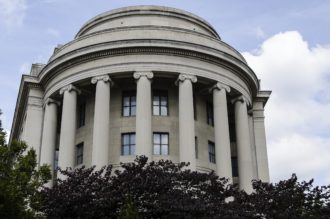
The Federal Trade Commission (FTC) recently released its Strategic Plan for Fiscal Years 2026–2030, setting out the agency’s enforcement priorities and operational objectives for the next five years under Chairman Andrew N. Ferguson. The plan reaffirms the FTC’s commitment to vigorously enforcing the nation’s antitrust and consumer protection laws “without fear or favor.” Critically for

On Tuesday, March 24, 2026, a New Mexico jury found Meta liable for failing to protect kids from child exploitation on its platforms and ordered the company to pay $375 million in damages for consumer-protection violations. The next day, a California jury found Meta and YouTube liable for platform features that cause children to become

The White House’s National AI Policy Framework sets out seven priorities for Congress to codify into federal law, including the preemption of state AI regulations in favor of a unified national standard; age-assurance requirements and stronger parental controls to protect children; deference to the courts on intellectual property questions arising from AI training on copyrighted

On February 12, 2026, a bipartisan group of legislators in Maryland proposed the Maryland Artificial Intelligence Toy Safety Act. This proposed legislation would amend the Maryland Consumer Protection Act to establish a sweeping regulatory framework for AI-enabled toys sold in the state, covering any device that uses machine learning, conversational AI, behavioral modeling, or similar computational processes and is marketed to or primarily used by children. This proposed legislation adds to a growing trend of increasing efforts, at both the federal and state levels, to regulate the use of AI in products and services used by children.  Continue Reading Maryland’s Artificial Intelligence Toy Safety Act: State-Level Regulation Fills the Federal Void on AI in Children’s Products

Day three of the ICPHSO Annual Meeting & Training Symposium in Orlando, Florida brought another packed slate of sessions, and the Crowell team was present throughout to capture the day’s key insights and conversations. Across panels spanning right-to-repair, online marketplace regulation, recall collaboration, and international risk assessment, a single urgent question surfaces: as products, supply chains, and consumer behaviors grow more complex, how do regulators, manufacturers, retailers, and platforms share — and sometimes contest — the responsibility for keeping consumers safe? Day three made clear that the answer increasingly demands cooperation, not just compliance.

Below is a closer look at select sessions from the day and the key takeaways that resonated with attendees.Continue Reading Day Three of the ICPHSO Symposium: Redefining Responsibility — Who Protects the Consumer in a Changing Marketplace?