
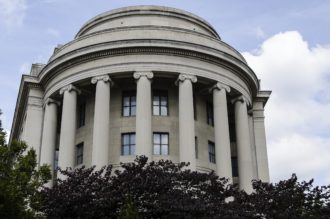
Over the past two weeks, the FTC secured a permanent injunction blocking Henkel’s $725 million acquisition of Liquid Nails, entered a stipulated order unwinding Zillow and Redfin’s $100 million market-exit agreement, and reached a $4 million settlement with Manchester City Nissan over unauthorized dealer fees. The agency also finalized $930,000 in penalties against Cox Media Group and two affiliated firms for deceptive AI advertising claims, issued a draft policy statement on personalized pricing open for public comment, updated National Do Not Call Registry fees for Fiscal Year 2027, and filed an amicus brief in a Fourth Circuit antitrust matter involving Amgen. These stories and more after the jump.
Aug. 17-21, 2026
August 19, 2026
The FTC announced it is seeking public comment on a draft policy statement on personalized pricing, when companies use personal data to set prices based on how much a company believes an individual consumer is willing to pay. The statement warns that retailers who suggest a price is the same for everyone, when it actually varies by person, could violate the FTC Act for misleading consumers. The FTC also warned that secretly collecting or using personal data to set personalized prices may itself violate the FTC Act. The public comment period closes September 25, 2026. The FTC framed the action as part of a broader effort to crack down on businesses that mislead consumers with hidden fees and surprise charges. For a detailed review of the FTC’s draft statement and its implication on businesses, see our article.
August 21, 2026
The FTC filed an amicus brief (in support of neither party) in an antitrust matter before the U.S. Court of Appeals for the Fourth Circuit. In the matter, CareFirst of Maryland, Inc., Group Hospitalization and Medical Services, Inc., and CareFirst BlueChoice, Inc. (“Plaintiffs”) allege that Amgen Inc. violated Section 2 of the Sherman act by buying exclusive rights to pending patent applications for the biologic drug Enbrel and that it shaped those applications to extend its monopoly and keep lower-cost competitors out of the market. For an in-depth analysis of the FTC’s position and what it means for patent acquisition strategies in biologic drug markets, read our client alert.
Aug. 24-28, 2026
Monday, August 24, 2026
The FTC, joined by five state attorneys general, reached a stipulated order resolving its antitrust lawsuit against Zillow and Redfin. According to the FTC’s press release, Zillow paid Redfin $100 million in 2025 to exit the internet listing services (ILS) market for multifamily rental properties. Under the alleged arrangement, Redfin agreed to shut down its ILS business, transfer its customers to Zillow, and stay out of the market for up to nine years—conduct the FTC characterized as violating Section 1 of the Sherman Act and Section 5 of the FTC Act. Five states filed a parallel complaint, which a court consolidated with the FTC’s case in November 2025. The FTC alleged that Zillow and Redfin together operated some of the nation’s largest rental platforms—including Zillow Rentals, Trulia, HotPads, Rent.com, and ApartmentGuide.com—and that the agreement eliminated Redfin as an independent competitor, further concentrating an already consolidated market and harming renters and property management companies. The order, in effect for 10 years, requires Redfin to relaunch its ILS business within six months, invest millions of dollars over multiple years, and hire dedicated staff. It also prohibits Zillow from interfering with Redfin’s employee recruitment efforts, requires Zillow to waive applicable noncompete and anti-poaching provisions, and grants ILS customers a nine-month window to renegotiate their Zillow contracts without penalty following Redfin’s relaunch
Wednesday, August 26, 2026
The FTC announced updated access fees for the National Do Not Call (DNC) Registry, effective October 1, 2026, for Fiscal Year 2027. Telemarketers calling U.S. consumers must download registered phone numbers from the DNC Registry to avoid contacting consumers who have opted out of telemarketing calls. The first five area codes are available at no charge, and exempt organizations, including certain charities and political callers, may access the full list for free. For FY 2027, the per-area-code access fee rises from $82 to $85, the half-year additional area code fee rises from $41 to $43, and the nationwide cap for a single entity increases from $22,626 to $23,425.
Thursday, August 27, 2026
The FTC announced it finalized orders against Cox Media Group (CMG), MindSift LLC, and 1010 Digital Works LLC, resolving allegations that they deceived business customers. The FTC’s complaints against CMG, MindSift, and 1010 Digital Works—which the agency originally filed in May—alleged that the companies violated Section 5 of the FTC Act by falsely marketing an AI-powered advertising service that purportedly used smart device microphones to capture consumer conversations and deliver geographically targeted ads. According to the FTC, the companies misrepresented both the technical capabilities of their service and whether consumers had consented to voice data collection, when in fact the service never used voice data and no consumers had opted in. The orders impose an $880,000 monetary judgment on CMG and $25,000 penalties on MindSift and 1010 Digital Works, directing all funds toward redress for affected CMG customers. Beyond monetary relief, each order permanently prohibits the companies from misrepresenting the capabilities of their advertising services, the collection and use of consumer voice data, the existence of consumer consent for data collection, and the geographic targeting features of their products.